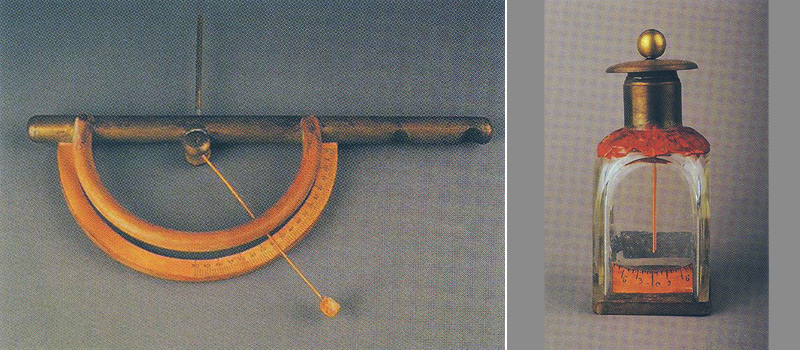
Micro-electrometer.
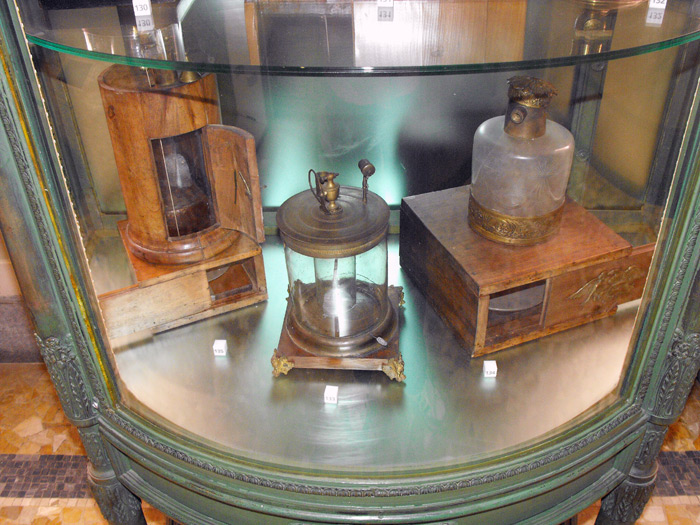
Alexander Volta invented an electrophorus model, in which the two pendulums are reached by threading two thin metallic wires, suspended by two small, mobile, silver rings, in two straws (straw electrometer).
This new structure allowed him to obtain:
- Less electricity dispersion, thanks to the insulating action of the straws;
- a better approach of the two elements sensitive to repulsion;
- a more regular behaviour with respect to the small sphere of elder pith, as well as the gold leaves.
Straw Electrometer.
Alexander Volta predisposed, then inside the electroscope, a gradated quadrant in order to measure the spread and therefore the amount of electricity. This way, the electroscope literally became an electrometer. For a better reading, on the gradated scale, of the spread of the straws, bottles were needed.
Henley's Electrometer.
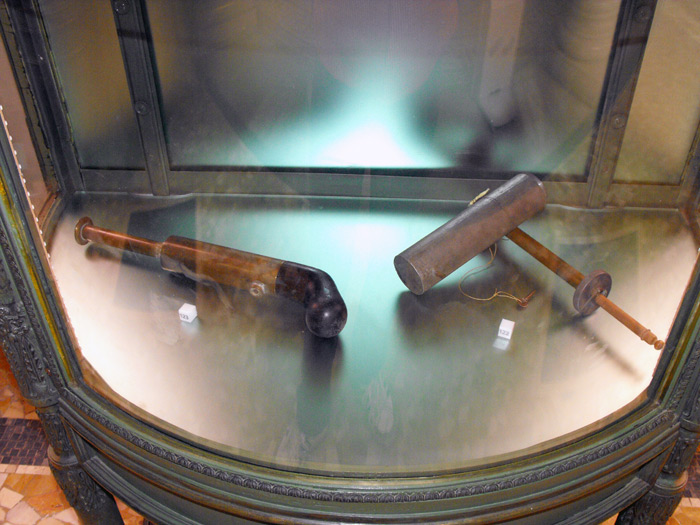
It is an electrometer realised by means of a single, mobile, pivoted pendulum in its extreme superior, to a small rod of conducting material. The pendulum is made up of a fine rigid conductor with a small sphere of light material (cork or elder pith) on the end of it. If the device is loaded, the pendulum, by a repulsive action between the charge of the same sign, rises, rotating around the pivot, by angle, the size of depends on the charge present on the electrometer.
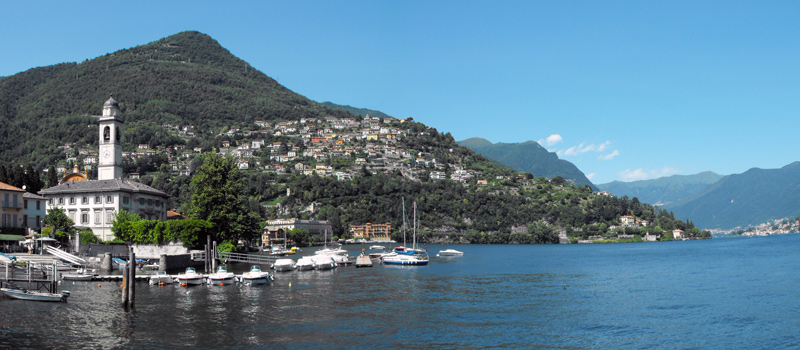
Cernobbio is the starting point for the Lariana Mountains Walk, a fascinating walk along paths between 600 - 1200 meters of altitude, entirely signalled by C.A.I. (Italian Alpine Club). The most prestigious villa is Villa d'Este.
Cernobbio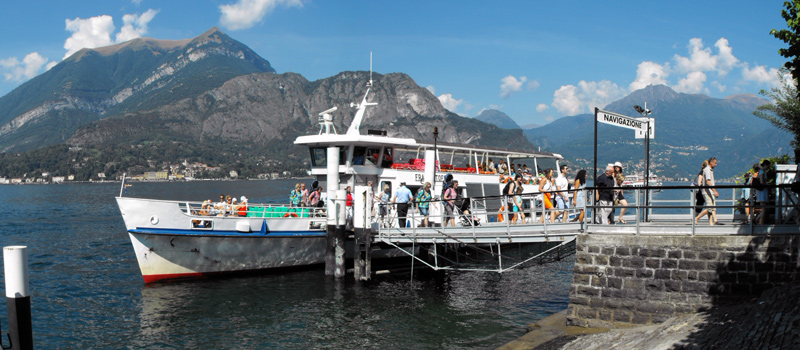
Various theme cruises are organized by the Lake Navigation Management, besides the normal lake navigation service, in July and August, it is possible to take a cruise on the Concordia with restaurant service.
Navigation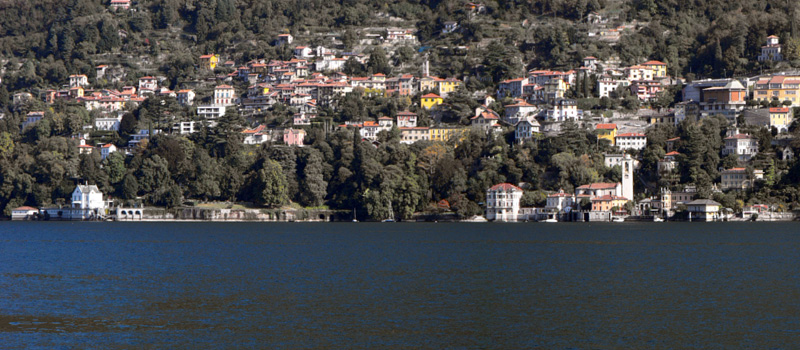
The town of Blevio is made up of seven hamlets, spread across the slopes of Monte Boletto to the shores of Lake Como. For centuries Blevio has been residential, as the amazing villas spread across the territory testify.
Blevio